


18 Nov Cracks in the Foundations
Posted at 08:00h
in INSIGHTS
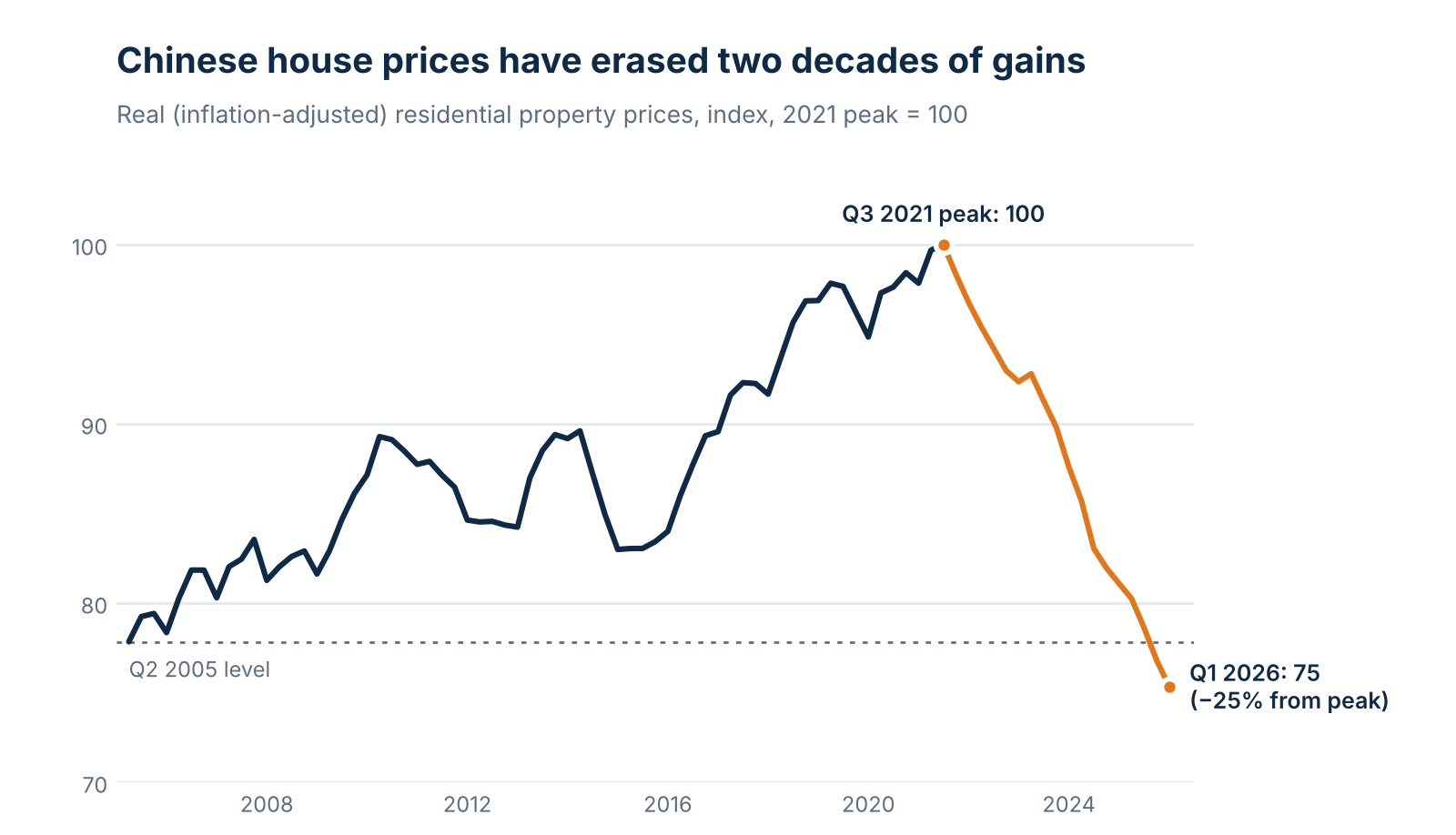
(Source: High Street, BIS via FRED. Adjusted for inflation; covers existing homes from 2016.)
China’s new-home prices fell again in September, extending more than three years of declines. The slump began with a decision in Beijing in 2020, when regulators introduced the “three red lines”: three debt tests that capped how much property developers could borrow and barred the most indebted, including Evergrande, from borrowing more. Six years later, the heaviest cost falls on households rather than developers. Officials say the market is stabilising, as they have for the past two years.
In China, the family flat is the family savings account. Most household wealth is held in property, and many own second or third homes. Adjusted for inflation and including existing homes, prices have fallen about a quarter since their 2021 peak to below 2005 levels, erasing two decades of gains. Unlike a share portfolio, there is no monthly statement showing the loss. Families feel it through the discount a neighbour accepted to sell, or the unfinished tower they are still paying a mortgage on.
Poorer households spend less, and uncertain ones spend less still. Consumer confidence in China fell to its lowest level on record in 2022. Lockdowns were the trigger, but the property slump has kept it from recovering. Shop sales have barely grown this year, and the economy has leaned on exports to keep growing.
The damage spreads further. Property investment has fallen by about a fifth this year, and new construction by a quarter. That means fewer orders for steel, cement and appliances, and fewer building jobs. Local governments, which long relied on selling land to developers, have seen that income drop by about a third. They are cutting spending and paying suppliers late, weakening demand further. And with buyers at home holding back, Chinese manufacturers have pushed more goods abroad, adding to trade tensions and squeezing producers around the world.
For South Africans, this is not a distant story. China is our largest trading partner, and its building sites drive much of the demand for the iron ore, manganese and coal we export. Yet our caution on China rests less on the property cycle than on how quickly the rules can change. The three red lines were followed a year later by crackdowns that reshaped technology and private education within months, wiping out hundreds of billions of dollars of shareholder value. House prices will find a floor; whether the rules will stay put is less certain. We keep our exposure to China small and size what we do hold with care, because policy risk is not something we can model.